ALL ABOUT ANTHRAX
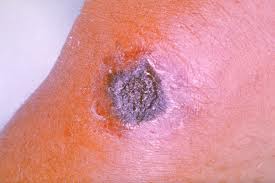 | WHAT IS IT?Anthrax is a disease caused by bacteria most commonly assoisted with herbivores and occassionally in humans.Most of the cases of the disease is lethal, however there are effective vaccines and is easier treated at earlier stages! Anthrax spores are formed naturally by bacteria within soil. These spores will survive for long periods of time until an animal or humans picks it up. According to the Mayo Clinic most anthrax infection occur from contaminated animals. Anthrax received its name from the Greek word "Anthrakis" which mean coal, because the cutaneous version of the disease causes skin lesions. These spores can be produced into vitro and used as biological weapons. |
Symptoms and parts of the body affected
Symptoms of the disease vary from how it was contracted, however if you are infected by anthrax you will receive these symptoms:
- Skin lesions
- Fever
- General malaise
- Headache
- Gastrointestinal upsets, such as vomiting
- Cough
- Flu-like symptoms
- Chest pain
- Joint pains.
Anthrax will primarily affect your lungs and skin. Anthrax will also affect your : throat, alveoli in the lungs, lymph nodes, respiratory system, blood stream, muscles, immune system, endocrine system, brain, spinal cord and the intestinal tract!
Origins
Anthrax was first recorded in 1491 BC and is thought to be originated in Africa. The old Testament describes the 5th and the 6th plague that showed symptoms of anthrax. Over the years Europe witnessed outbreaks of anthrax. The most acute outbreaks happening at 14th century in Germany, 17th century in Russia and Europe. The disease affected allot more livestock than it did to humans. It wasn't until 1769 where Jean Fournier classified the disease as anthrax!Fournier also noted that between those who worked with animal hair or wool are more likely to get infected.
The largest outbreak ever recorded in the was in United States in 1957 when 9 employees of goat hair processing became ill after handling contaminated shipment from Pakistan. Four of the five patients with the disease died. Fortunately anthrax is now rare even among livestock largely due to vaccination of the animals.

Spread and transmission
Fortunately Anthrax is not contagious! These are the ways of getting infected:
Gastrointestinal anthrax: Occur after eating meat infected with the bacteria that causes anthrax (usually meat that is not fully cooked) symptoms can include fever, loss of appetite, bloody diarrhea, sore throat, and swollen neck.
Cutaneous anthrax: Occurs: When spores from the bacteria enter a cut or scrape in the skin. The skin becomes itchy then develops a sore that turns into a blister which may break and bleed and within two to seven days the broken blister turns into a dark coloured black scab. Without treatment the infection may infect the lymph node or blood. This type of infection is treatable with the right antibiotics and death occurs from 5-20 percent.
Inhalation anthrax: This is the most lethal exposure and happens when the anthrax spores are inhaled. However to get infected a human must inhale at least 10,000 spores. At first, the infection seems like cold or flu. The person’s health rapidly become worse over the next few days and may suffer severe breathing problems and shock. Without treatment, death occurs 70 to 80 per cent.

Treatment
The treatment for anthrax is a 60 day course of an antibiotics such as ciprofloxacin or doxycylcine. Antibiotics or combinations work most effective depending on the type of anthrax you have, your age, health an other factors. The treatments work best at early stages of the infection! While most cases of anthrax respond to antibiotics, advanced anthrax (through inhalation) may not, this is because the bacteria have already produced toxins which eliminate the drugs.
Preventation
Since anthrax is a bacteria there is a vaccine and isn't intended for the public, but instead given to military personnel who may be exposed to bio-terrorism.
- Avoid contact with infected animals
- Strengthen your immune system
- Due to bio-terrorism it is advised to handle suspicious mail properly; do not shake, taste or smell the package and call a law enforcer.
- Do not touch fluid draining from an anthrax wound.
- Always ensure your meat is fully cooked before eating.
How the body’s immune and endocrine system respond to the disease
According to the National Institute of Environmental Health Sciences, anthrax produces a toxin which prevents the immune system recognizing it as a disease, preventing it from fighting the infection. When a human inhales anthrax spores, the spores are surrounded by large white blood cells which are the defence against attacks. However the anthrax spores don't die because of the toxins released by it stop an essential protein required for the immune system to work. Then the spores reproduce inside the blood cells, which then go onto invading the lymph nodes followed by the blood stream leading to illness and death.


